
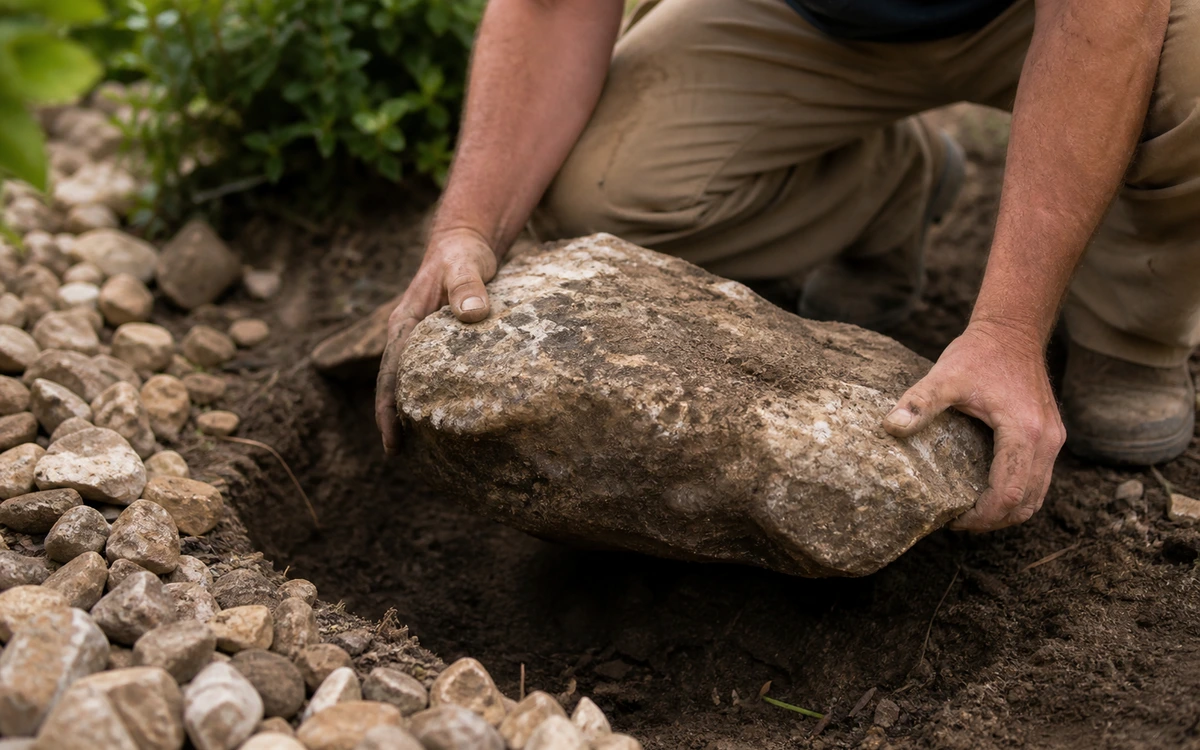
We provide professional landscape rock removal services in Kirksville, MO for overgrown beds, buried debris, and compacted stone that interfere with drainage and new installations. Excavation and hauling clear out unwanted material, expose underlying soil, and create a clean surface ready for proper grading and landscape updates. Call us today to get started.
What Does Landscape Rock Removal Include and When Is It Necessary?
Landscape rock removal involves extracting decorative or construction rock from soil, hauling it away, and restoring the surface. It’s necessary when rocks sink, shift, or interfere with new landscaping like sod, plants, or irrigation systems.
How Do Clay and Limestone Soils Affect Landscape Rock Removal in Kirksville?
Kirksville’s soils often combine clay with underlying limestone that can surface during landscaping. Neighborhoods near Thousand Hills State Park and surrounding areas frequently uncover stones during yard work. Removing these rocks helps improve soil structure and prepares the ground for planting.
Why Do Landscape Rocks Sink, Spread, or Become a Problem Over Time?
Landscape rocks sink or spread due to soil compaction, erosion, and foot traffic pushing them deeper or outward. Without proper edging or a stable base layer, rocks gradually mix with soil and lose their clean, defined appearance.
Can You Remove Landscape Rock Without Damaging the Underlying Soil or Yard?
Yes, landscape rock can be removed without damaging the yard by using the right equipment and separating rock from soil carefully. Techniques like screening or mechanical sifting help preserve topsoil while clearing out unwanted material.
What’s the Difference Between Removing Landscape Rock and Replacing It With New Material?
Removing landscape rock focuses on extracting and clearing existing material, while replacement includes adding new rock, mulch, or soil afterward. Replacement projects often require grading, weed barrier installation, and proper base prep to prevent future issues.
Which Types of Landscape Rock Are the Hardest to Remove and Why?
Larger river rock and compacted gravel are the hardest to remove because they settle deep into the soil and interlock over time. Fine gravel mixes with dirt easily, making separation more labor-intensive and requiring screening equipment.
How Do You Know If Landscape Rock Should Be Removed or Just Refreshed?
Landscape rock should be removed when it’s buried, mixed with soil, or no longer draining properly. If the rock layer is still clean and level, it can sometimes be refreshed by adding new material and redefining edges instead of full removal
How Much Does Landscape Rock Removal Cost in Kirksville, MO?
Landscape rock removal costs in Kirksville, MO typically range between $432 and $2,592, with typical pricing depending on the total area covered, depth of rock, ease of access for equipment, and the amount of material that must be hauled away. Pricing can also vary based on soil conditions beneath the rock, presence of landscape fabric, disposal fees, and whether grading or site restoration is required after removal.